

Within the Italian Christmas traditions, there is the “Presepe” which is the Italian term for the nativity scene or Christmas crib.
St. Francis of Assisi revolutionized the concept of celebrating the Nativity, in 1223 he set up the first modern nativity scene in Greccio, a small village in the province of Rieti, on Christmas Day. After his journey to the Holy Land in 1220, inspiration derived from the beauty of Bethlehem prompted him to ask Pope Honorius III for permission to depict the nativity scene outside the convent of Greccio. The grotto near the village was the stage for this first nativity scene, with the presence of the manger, ox and donkey, but without yet the representation of Mary, Joseph and the baby boy.
During the 15th century, the nativity scene arrived in Naples and soon conquered noble residences, becoming an ornamental object or a small chapel. But it was in the 18th century that the nativity scene reached its peak, becoming a sought-after work of art, especially in Naples. Noble families competed to have the most magnificent nativity scene, dedicating entire rooms in their residences to it.
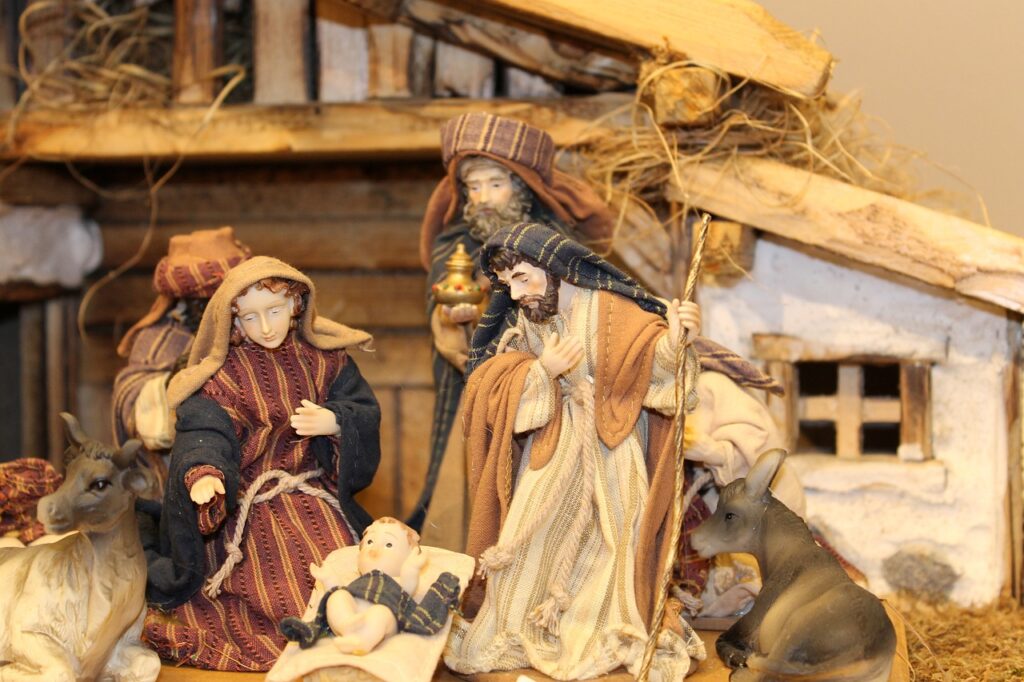
In Bologna, the Santa Lucia fair was born, an annual market that displayed figurines created by local artisans, attracting fans from all over the world. Originally a communication tool in churches, the nativity scene settled into the homes of ordinary people during the 18th and 19th centuries, becoming an essential part of the holiday season.
Today, thanks to technology, the traditional nativity scene has evolved, using new materials and presenting new features. Sometimes made with plastic for its affordability and durability, nativity scenes are also displayed outdoors in the squares of many cities, becoming an integral part of Christmas decorations. Thanks to social networks, the nativity tradition is promoted and shared on a global scale, engaging a wide audience.


